Every family is a constellation. Points of light across the dark, held together by lines you can only see once you know where to look. This is mine: Pennsylvania German farmers, Carpatho-Rusyn coal miners, Welsh colliers, and a Carolina family who came north. Traced ancestor by ancestor, home by home, back to the 1720s. Touch a star to meet them.
90 souls · 9 generations · 78 sources
Kline
Drotter & Chepan
Lloyd
Wanner
Richardson
Roan
Arline
The direct line
Nine generations of the people Will descends from directly. The spine of the constellation.
Parents
Grandparents
Great-grandparents
2nd-great-grandparents
3rd-great-grandparents
4th-great-grandparents
5th-great-grandparents
6th-great-grandparents: the first to arrive
The branches
Each arm of the constellation is a people and a place, with the history that carried them here.
Kline
Palatine Germany → Berks County, PA (since ~1741)
1710-1770 · The Palatine migration
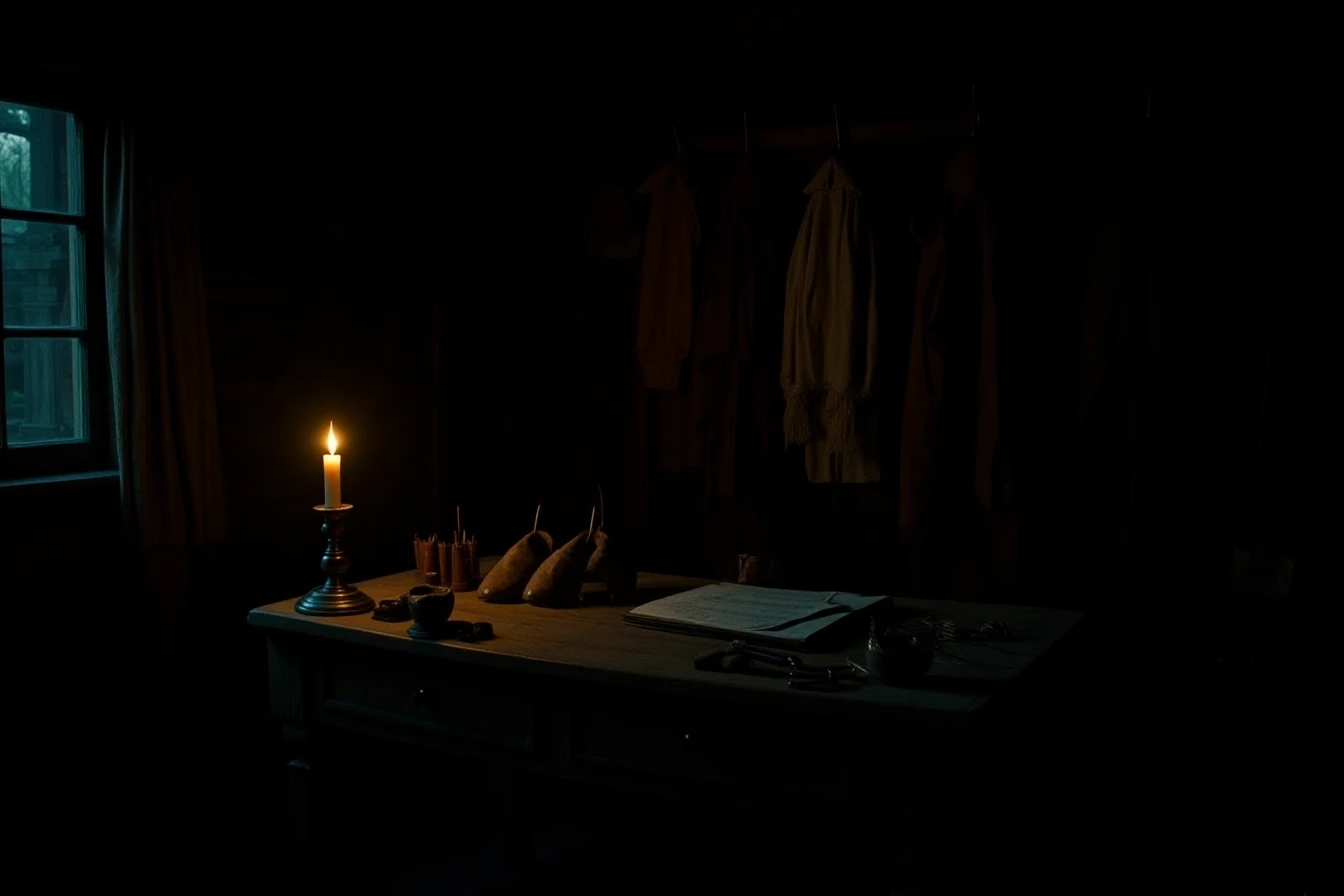
Michael Kline was one of tens of thousands of German-speaking "Palatines" who fled war, crop failure, and crowded land in the Rhineland for Pennsylvania. They floated down the Rhine to Rotterdam, sailed to Philadelphia, and swore an oath of allegiance on arrival. Those oaths are the passenger lists that survive today. Many arrived as redemptioners, working off their passage; Michael, a literate shoemaker, was in Berks County by the 1750s. The leading candidate for his crossing is the St. Andrew, which qualified at Philadelphia on 2 October 1741.
1740s-1900s · The Pennsylvania Dutch of Berks County
The Klines, Leshers, Wanners, Hubers, and Zweizigs were deep Pennsylvania-German ("Pennsylvania Dutch") stock. They were farmers who worked the limestone soils of Berks County for two centuries, spoke a German dialect at home, and worshipped in the old Lutheran and Reformed "Union" churches like St. John’s Gernants and St. John’s Kutztown. Their farms passed son to son by will and deed; the "old Kline homestead" west of Kutztown stayed in the family from Philip through Nathan.
1941-1945 · A soldier from Penn Township
Lloyd Wilson Kline served in the U.S. Army in World War II, one of the millions of American men who left small towns for the largest war in history and came home to build families and houses. He returned to Penn Township, took up the family land, and in time carved it among his children.
Drotter & Chepan
Jakubany, Spiš: Carpatho-Rusyn, Greek Catholic
1780s-1920 · The Rusyns of Jakubany
Jakubany was a Carpatho-Rusyn village. The Rusyns are an East-Slavic, Greek (Byzantine) Catholic people of the northern Carpathians, distinct from their Slovak neighbors. The family worshipped at the Greek Catholic church of Sts. Peter & Paul, whose Latin-kept registers carry the Drotárs and Čepans back to the 1780s. Between 1890 and 1920 the village lost roughly a third of its people to the American coal and mill towns. That wave carried Michael Drotter to Pennsylvania in 1891 and Mary Chepan in 1902.
1850s-1950s · The anthracite coal region
Two of the family’s immigrant streams met in the hard-coal country of Schuylkill County: the Welsh Lloyds at Cumbola and the Rusyn Drotters at New Philadelphia, patches a few miles apart. It was dangerous, sooty work. Miners, pump men, and breaker boys fed the anthracite that heated the industrial Northeast. Mary Drotter, Will’s grandmother, was born into that world in New Philadelphia in 1916.
Lloyd
Wales → the Schuylkill anthracite region
1840s-1900 · The Welsh in the coal fields
Skilled Welsh colliers left the valleys of South Wales for the Pennsylvania anthracite fields through the mid-1800s, often taking the foreman and engineer roles their experience earned. Jane Lloyd, born in Wales about 1834, brought the family to Cumbola; by 1880 she was a widow heading the household, her sons Benjamin and James in the mines. The Welsh given name "Morgan Lloyd" runs through the family.
Wanner
Pennsylvania German, Exeter Township, Berks
Richardson
Cape Fear, North Carolina → Reading, PA
1916-1970 · The Great Migration to Reading
In the great movement of African Americans out of the rural South, two Carolina families came north to Reading, Pennsylvania, and met there. They were the Richardsons of the Cape Fear and the Roans of the Piedmont. Ada Arline lived on Hudson Street; Silverlean Richardson raised her family in the city; William Roan arrived around 1934. Will’s mother Evelyn was born of that meeting.
1860s-1920s · The Cape Fear country
Sidney Robert Richardson’s world was the pine-and-sandhill corner of southeastern North Carolina. He was born in Cumberland County, married in Columbus County, and lived in Bladenboro. The family tradition of Haliwa-Saponi descent was examined carefully and, honestly, set aside: the geography and records point to an ordinary African-American family of the Cape Fear, and only a DNA test could reopen the question. The truth here is told plainly, as the family deserves.
Roan
Piedmont North Carolina, back to the enslaved era
1810s-1870 · Slavery and freedom in the Piedmont
The Roan line reaches back into the enslaved era of the Carolina Piedmont, to Henderson and Eliza Roan, born in bondage in Davie County in the 1810s-20s, and their son Spencer, born enslaved about 1842. In 1870, in the first year it was possible, Spencer and Lucinda Humphry registered their marriage as free people. It was a small, documented act of freedom, and it opens this branch of the family to the record.
Arline
Horry County, South Carolina
The animated crossing
The North they followed
Will's mother's people were a Carolina family who came north in the Great Migration. Out of the Cape Fear pines, the South Carolina rice coast, and the Piedmont, to Reading. Press play, or drag the years: as each life begins, its star ignites and its birthplace lights, and when the 1930s come the light streaks north to the city where they all met.
Where: the ground of the family1985
When: the line, oldest to newest1985
1808 U.S. bans the transatlantic slave trade
1815
Henderson Roan
Spencer’s father, born into slavery in Davie County in the 1810s or 1820s. That is about as far back as an enslaved line can usually be traced. "Roan" is most likely an enslaver’s surname.
strong
1820
Eliza Roan
Spencer’s mother, born into slavery in Davie County. She is the deepest reach of the Roan line.
strong
1831 Nat Turner's Rebellion & the NC slave-code crackdown
1842
Spencer Roan
Born enslaved in Davie County in 1842; he married Lucinda Humphry in 1870, a freedman’s marriage in the first year it was possible. His marked grave still stands in the Roan family ground at Mocksville.
documented
1851
Joseph "Joe" Woodruff
Mamie’s father, born in the Wilkes County hills in 1851 and living until 1932. His name was recovered from his daughter’s death certificate, the record that finally fixed her parentage.
documented
1860
Lucinda "Lucie" Humphry
Married Spencer Roan in Davie County in 1870.
strong
1861-1865 The Civil War
1861
Sarah "Sallie" Carter
Mamie’s mother, born in Davie County around 1861. She is the Carter whose maiden name became her daughter’s middle name, recovered from Mamie’s death certificate.
documented
1863 Emancipation Proclamation · the world the Roan elders were born into begins to end
1865 Slavery abolished by the 13th Amendment
1866 NC lets freedpeople record their marriages · the door Spencer & Lucinda walked through in 1870
1867
Miles Arline
A home-owning carpenter of Conway, Horry County, SC; Ada’s father. His own father was Virginia-born.
documented
1871
Sarah Williams
Miles Arline’s wife, of Conway, Horry Co., SC. Williams was her name before it was Arline, and it stayed attached to her daughter for the rest of Ada’s life.
documented
1884
Albert Aaron Roan
Of Mocksville, Davie County; he and his wife Mamie both died when their son William was a boy. He rests in the Roan family ground at Second Presbyterian, Mocksville.
documented
1886
Mamie Carter Woodruff
Born in Rowan County; William Roan’s mother, who died when he was small. She rests beside Albert at Second Presbyterian, Mocksville.
documented
1892
Sidney Robert Richardson
Born in the Cape Fear country of southeastern NC; married Ada Arline in 1912 and lived in Bladenboro. A member-tree had confused him with another man. His own records rebuilt his life: draft card, marriage, his daughter’s death certificate.
documented
1892
Ada Arline
The "Grandma Ada Berry" of family memory. Born in Conway, SC, she lived to 108, which is why Will (born 1980) knew her.
documented
1896 Plessy v. Ferguson: "separate but equal"
1898 The Wilmington coup & massacre · in the Richardsons' corner of the Cape Fear
1900 North Carolina strips Black men of the vote
1901
George W. Arline
Ada’s younger brother, born at Conway and dead at fifty-seven in Tabor City. Where Ada went north to Reading, George stayed inside the same fifty miles of Carolina his parents had worked.
documented
1904
Whis B. Johnson
Silverlean’s partner in the 1950s and the father of her son Ronald, who carried the name Whis his whole life without ever carrying the surname. He came up from Winston-Salem to Reading during the war and went back to Forsyth County to be buried.
documented
1909
William Aaron Leroy Roan
Will’s grandfather, orphaned young in the NC Piedmont, migrated to Reading around 1934. Will’s mother always compared him to Will.
strong
1913
Pearl Richardson
Sidney and Ada’s eldest child, who came north to Reading and died young in 1944; her death certificate helped confirm her parents.
documented
1916-1970 The Great Migration · six million leave the rural South
1917 World War I & the draft · Sidney Richardson registers at Bladenboro
1917
Silverlean Richardson
Will’s grandmother, remembered as "Civilene," a phonetic rendering of Silverlean. Born in Bladen County, NC, she came to Reading as a child and raised a large family.
documented
1919 Red Summer: white mob violence nationwide
1920
Edgeco Richardson
One of Sidney and Ada’s twin sons. A World War II Army veteran who cooked for his unit and then for a lifetime as a master chef. He lived to 99 and rests with military honors at Indiantown Gap.
documented
1920
Angelo Richardson
Edgeco’s twin brother, one of Sidney and Ada’s sons.
strong
1929-1939 The Great Depression
1934
John Sidney Morrison
The eldest of Silverlean’s children and Will’s uncle, born in Reading in 1934. His own obituary names his parents as John Quincy Morrison and Silverlean Richardson, showing where the Morrison surname entered the family.
documented
1941-1945 World War II · Edgeco Richardson serves in a segregated Army
1948 Executive Order 9981 desegregates the military
1950
Bradley Richardson
Angelo’s son, born in Reading on Christmas Day 1950. A veteran, and the third man in this family to be laid to rest at Indiantown Gap.
documented
1951
Ronald "Whis" Morrison
Will’s uncle was a Reading High track star, Class of 1970, who gave thirty-five years to Carpenter Technology, the same Reading steelworks where his father’s-side counterpart Webster Kline once worked. It was his 2024 obituary that finally named all thirteen of Silverlean’s children.
documented
1954 Brown v. Board of Education
1964 Civil Rights Act
1965 Voting Rights Act · the vote lost in 1900 is restored in law
1968 Dr. King assassinated
1980
William "Will" Kline
The living end of four immigrant streams meeting in one person: Pennsylvania German, Carpatho-Rusyn, Welsh, and Carolina African-American.
documented
1985
the South they came from the North they reached
The crossing & the homes
Six streams across two oceans and three centuries, all converging on the coal-and-iron country of eastern Pennsylvania. From there, west to Oakland, California. Three begin in Africa: the Richardson line rooted in the Cape Fear, the Arline line on the South Carolina rice coast, and the Roan line in the Piedmont, peopled by the domestic trade out of Virginia. Three begin in Europe and are documented as to homeland: Palatine Germany, the South Wales coalfield, and the Carpatho-Rusyn village of Jakubany.
Richardson · the Cape Fear
Arline · the rice coast
Roan · the Piedmont & the Chesapeake
Kline · Palatine Germany
Lloyd · South Wales colliers
Drotter & Chepan · Jakubany
A word of honesty about the African origins. For the three enslaved-ancestor lines, the specific African birthplace of any individual is almost certainly undocumented. No manifest ties a named ancestor to a named port. The regions shown are probabilistic best-guesses, reasoned backward from the well-documented mechanisms of how enslaved people reached each place, and weighted by the aggregate trans-Atlantic record. They are coasts of departure (a proxy for many peoples), describing the ancestral pool each line most likely drew from, not one person’s genealogy. By the mid-1800s the internal slave trade had thoroughly blended those regional origins. Where the map shows a faded, branching set of African origins, that fading is the point: it marks what is estimated, not recorded.
Michael Kline's town home and shoemaker's shop. He and Barbara his wife already held it in 1757, when they mortgaged it for £50. That mortgage is the record that first proves the family in Reading.
Michael moved to the country around 1790 and died here 5 April 1796. His will divided the land among his eight sons. This is the Kline country seat, and it anchors the family in the Kutztown corner for a century.
Richmond Twp, near Kutztown, Berks Co., Pennsylvania
60 acres three miles west of Kutztown on the Easton Road. The family called this farm the "old Kline homestead." Philip settled it, Benjamin farmed it (real estate $5,000 in 1860), and Nathan was born on it. Boundary calls in neighbors’ deeds trace it down the generations: "land of Benjamin & Reuben Klein" becomes "Nathan & Reuben Klein."
The heart of the family. A single field of Penn Township farmland on a dirt lane that once had no name. The lane is Northkill Lane now, though some deeds still read Irish Creek Road. Webster and Erma bought the field, and it passed to their son Lloyd in 1945. In 1972 Lloyd carved it among his children into the cluster of family homes still standing there today.
Home · 1972-2000
David Kline's home
Penn Twp, near Bernville, Berks Co., Pennsylvania
The parcel Lloyd deeded to his son David in 1972. David lived here until his death in 2000; his ashes were spread on the family ground.
The Reading steelworks where Webster Allen Kline worked as a machinist until his death in 1937. A lifetime later, and on the other side of the family, Will’s maternal uncle Ronald "Whis" Morrison gave the same works thirty-five years. Two branches, one plant.
Where Michael Drotter was laid to rest in February 1923, three days after the colliery explosion that killed him. He was a Greek-Catholic Rusyn immigrant buried in the town’s Latin-rite Catholic churchyard, as was the custom where no Byzantine church stood.
okres Stará Ľubovňa, Spiš, Slovakia (then Austria-Hungary)
One Carpathian village gave the family both of its Slovak lines: the Drotárs and the Čepans. A Carpatho-Rusyn, Greek (Byzantine) Catholic village whose parish of Sts. Peter & Paul kept the registers that carry the family back to the 1780s. Between 1890 and 1920 Jakubany lost roughly a third of its people to the American coal and mill towns. That wave took Michael in 1891 and Mary in 1902.
The anthracite patch on Water Street where the Welsh Lloyds settled. Benjamin Lloyd worked the mines and his daughter Erma was born here in 1892, right beside the New Philadelphia where the Slovak Drotters lived. Two immigrant streams, one coal region.
The pine-and-sandhill corner of southeastern North Carolina where Sidney Robert Richardson was born in 1892 and raised his family in Bladenboro. This is the Carolina African-American world Will’s maternal line came from.
The Piedmont-NC ground of the Roan line, back to Spencer Roan (b. 1842, enslaved) and his parents Henderson & Eliza. That is about as far as an enslaved line can be traced.
The Great-Migration destination where the Carolina families put down roots. Ada Arline (as "Grandma Ada Berry") lived on Hudson Street, and Will’s mother Evelyn was born here.
A historic Black church cemetery in Mocksville: the Roan family burial ground. Here lie Spencer Roan (born enslaved, 1842-1909), his son Albert and daughter-in-law Mamie, and three Roan infants; the surrounding stones (Clement, Smoot, Furches, Carter) are the Black families of Reconstruction-era Davie County. The marked grave of Will’s enslaved-born 2nd-great-grandfather still stands.
Brown's Landing, Elizabethtown, Bladen Co., North Carolina
The U.S. Army Corps of Engineers navigation lock and dam on the Cape Fear River, completed in 1917. It was the active federal jobsite at Elizabethtown that June. Sidney Richardson’s WWI draft card names it as the "government contract at Elizabethtown," where he worked as a laborer. A public work he helped build that still stands.
The national cemetery beside Fort Indiantown Gap. Will’s great-uncle Edgeco Richardson, a Technician Fourth Grade in the U.S. Army in World War II, is buried here with full military honors, in Section 39, Site 276. Here too rests John Delvin Benjamin, David’s stepbrother and a decorated Vietnam combat veteran. He was a Staff Sergeant in the U.S. Army, and he lies in plot 54-828.
A Berks County memorial park east of Reading where William Aaron Leroy Roan rests. He was Will’s maternal grandfather, and he came north from the Piedmont.
This is your history too
If you're family, or you knew any of these people, your photos, memories, and corrections are wanted. Add your name, then share what you have. Everything goes to the family for review before it appears here.
Cookies
Strictly necessary cookies keep you signed in. Optional ones help us see which pages land and which don't. Pick what you want. You can change it any time. Details.